


Hembased 3D Filament
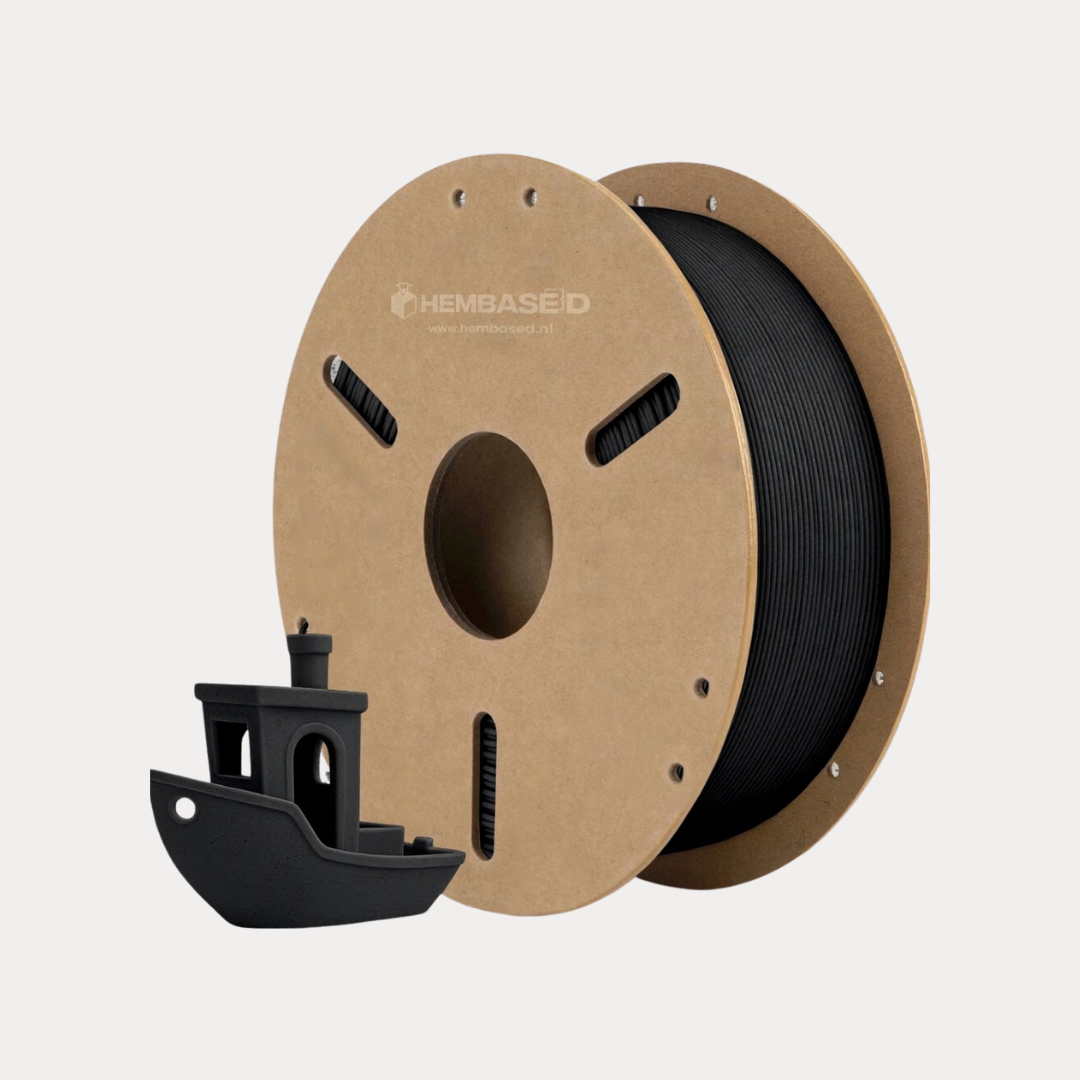
Hembased cold compostable 3D filament is made from palm leaf biopolymer and is fully biobased and biodegradable. The filament delivers stable and reliable printing performance and is suitable for both hobbyists and professional teams. Whether you are creating prototypes, printing educational models, or developing functional end products, Hembased makes sustainability tangible and measurable with a credible end-of-life.
Couldn't load pickup availability


Product Description
Hembased Cold Compostable 3D Filament is made from a palm leaf-based biopolymer and is fully bio-based and biodegradable. It delivers consistent, reliable print performance and is suitable for both makers and professional teams. Whether you're producing prototypes, educational models, or functional end-use products, Hembased helps make sustainability tangible through a more credible end-of-life.
Advantages
- Cold compostable end-of-life with no industrial composting required
- Made from 100% bio-based palm leaf biopolymer
- Biodegradable at the end of its life cycle
- Consistent and reliable print performance
- Suitable for both makers and professional teams
Details
Hembased filament is made from a genuinely sustainable raw material. At its core are fibre-rich palm leaf residual streams that would otherwise be burned as waste. These naturally fallen leaves are collected, dried and milled into a fine powder, forming the biological foundation of the biopolymer.
The powder is then transformed into HemCell granules using an innovative polymer production process. The result is a monomaterial matrix, rather than a simple blend or composite, offering improved thermoplastic performance and cold compostable biodegradability.
By using agricultural residual streams instead of food crops or virgin plastics, this process reduces environmental impact, avoids competition with food production and contributes to a lower carbon footprint.
Specifications
- Filament diameter: 1.75 mm
- Filament weight (excluding spool): 1 kg
- Spool weight: 154 g
- Recommended nozzle diameter: 0.8 mm
- Printing temperature: 170–190°C
- Bed temperature: 30°C
- Cooling: 30%
- Drying recommendation: 12 hours at a maximum of 50°C
- Print speed: 30–80 mm/s
Tips Printing
- Use Hembased filament like any standard FDM filament.
- Keep the nozzle within the recommended temperature range and maintain consistent cooling for the best print quality.
- For longer print jobs or larger parts, pre-drying the filament according to the drying recommendations can help maintain optimal print performance.
How Cold Composting Works
Print your part – Create your design using Hembased filament.
Use it as intended – Use your printed object just like any other 3D printed product.
Break it into smaller pieces – Cut or break the filament or printed object into smaller pieces to accelerate the composting process.
Cold compost it – Place it in your home compost or an outdoor compost pile and let nature do the rest.
What to Expect During Composting
Cold composting is a natural process. The decomposition time depends on the thickness of the printed part and environmental factors such as moisture, temperature and microbial activity.
Under outdoor composting conditions, the material can fully disintegrate, leaving behind only biologically active compost.
Product Description
Hembased Cold Compostable 3D Filament is made from a palm leaf-based biopolymer and is fully bio-based and biodegradable. It delivers consistent, reliable print performance and is suitable for both makers and professional teams. Whether you're producing prototypes, educational models, or functional end-use products, Hembased helps make sustainability tangible through a more credible end-of-life.
Advantages
- Cold compostable end-of-life with no industrial composting required
- Made from 100% bio-based palm leaf biopolymer
- Biodegradable at the end of its life cycle
- Consistent and reliable print performance
- Suitable for both makers and professional teams
Details
Hembased filament is made from a genuinely sustainable raw material. At its core are fibre-rich palm leaf residual streams that would otherwise be burned as waste. These naturally fallen leaves are collected, dried and milled into a fine powder, forming the biological foundation of the biopolymer.
The powder is then transformed into HemCell granules using an innovative polymer production process. The result is a monomaterial matrix, rather than a simple blend or composite, offering improved thermoplastic performance and cold compostable biodegradability.
By using agricultural residual streams instead of food crops or virgin plastics, this process reduces environmental impact, avoids competition with food production and contributes to a lower carbon footprint.
Specifications
- Filament diameter: 1.75 mm
- Filament weight (excluding spool): 1 kg
- Spool weight: 154 g
- Recommended nozzle diameter: 0.8 mm
- Printing temperature: 170–190°C
- Bed temperature: 30°C
- Cooling: 30%
- Drying recommendation: 12 hours at a maximum of 50°C
- Print speed: 30–80 mm/s
Tips Printing
- Use Hembased filament like any standard FDM filament.
- Keep the nozzle within the recommended temperature range and maintain consistent cooling for the best print quality.
- For longer print jobs or larger parts, pre-drying the filament according to the drying recommendations can help maintain optimal print performance.
How Cold Composting Works
Print your part – Create your design using Hembased filament.
Use it as intended – Use your printed object just like any other 3D printed product.
Break it into smaller pieces – Cut or break the filament or printed object into smaller pieces to accelerate the composting process.
Cold compost it – Place it in your home compost or an outdoor compost pile and let nature do the rest.
What to Expect During Composting
Cold composting is a natural process. The decomposition time depends on the thickness of the printed part and environmental factors such as moisture, temperature and microbial activity.
Under outdoor composting conditions, the material can fully disintegrate, leaving behind only biologically active compost.


